
Modern polyethylene installation is about producing a high-quality joint and being able to document exactly how it was produced. For contractors, engineers and developers, the Uisce Éireann PE pipe requirements link material selection and fusion technique with operator competence, equipment calibration, joint traceability and testing.
Uisce Éireann published Revision 3 of its Water Infrastructure and Wastewater Infrastructure Codes of Practice in August 2025. These documents cover the design, construction, testing, commissioning and quality assurance of self-lay infrastructure connecting to its networks. This guide focuses on PE80 and PE100 systems, electrofusion, butt fusion and the records needed to support project handover.
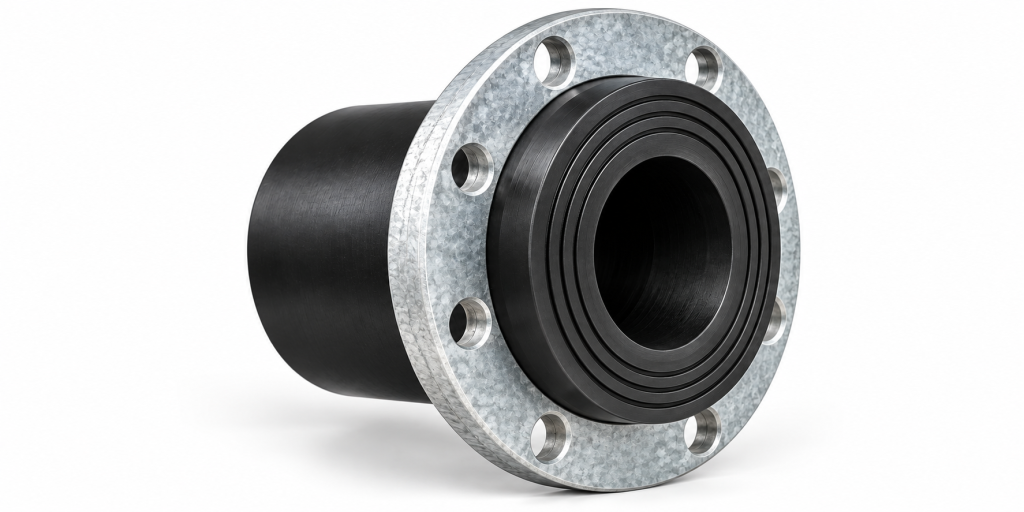
Featured image: AI-generated editorial illustration, not a photograph of an inspected installation or a welding procedure. Site work requires the shelter, preparation and controls described below.
Two Codes – Water and Wastewater
The two documents have different applications. The Water Code covers water infrastructure and connection facilities associated with developments connecting to the public water network. The Wastewater Code performs a similar role for wastewater infrastructure, including PE rising mains.
| Infrastructure | Code reference | PE sections used here |
|---|---|---|
| Water | CDS-5020-03 | 3.9, 3.10, 4.10 and 4.11 |
| Wastewater | CDS-5030-03 | 3.14.2, 3.16 and 4.11.3 |
Read the applicable Code alongside the Standard Details, project design, connection agreement and Uisce Éireann instructions. The requirements below are selected points, not a complete specification.
PE Pipe Requirements for Water Infrastructure
Section 3.9 of the Water Code recognises PE80 MDPE or HDPE and PE100 systems for appropriate water-main and service-connection applications. SDR11 and SDR17 are referenced. Plastic water service connection pipes are required to be blue.
PE pipes and fittings must meet the applicable parts of IS EN 12201: Parts 1 and 2 for the pipe system requirements and Part 3 for fittings. The Code also references WIS 4-32-08 for fusion jointing, with other requirements applicable to particular pipe systems.
The developer must determine the pressure class from the pressure at the connection point and the maximum in-service operating pressure. Material grade or colour alone does not establish suitability: confirm the design, SDR, fittings and operating conditions together. Our PE Pipe Systems range is a starting point for product discussions, not a substitute for that assessment.
PE Pipe Requirements for Wastewater Rising Mains
The Wastewater Code recognises polyethylene for rising mains. Section 3.14.2 requires PE pipe and fittings to comply with IS EN 12201, with fusion and electrofusion fittings addressed under Part 3. It specifies that PE rising main pipe is to be black.
Relevant references include WIS 4-32-08 for fusion jointing and IGN 4-32-18 for pressure rating. Hydrostatic testing of the PE pressure pipelines described in Section 4.11.3 is referenced to WIS 4-01-03.
Electrofusion and Butt Fusion Requirements
Water Section 3.10.1 and Wastewater Section 3.16.1 address fusion jointing. They reference WIS 4-32-08 (2016), ISO 21307:2017 for butt fusion procedures, and ISO 12176 Parts 1 and 2 for butt fusion and electrofusion equipment respectively. The Wastewater Code cites the BS ISO versions.
The Codes also specify CE certification for the equipment. A machine that switches on and completes a cycle still needs current calibration evidence. Keep certificates linked to the actual machine identification so they can be produced during inspections.
When selecting electrofusion welding equipment or butt fusion equipment, check the required pipe range, procedure, logging functions and documentation. Arrange servicing and calibration around the work programme.
PE Welding Operator Training and Experience
Water Section 3.10.2 and Wastewater Section 3.16.2 require trained and experienced jointing personnel with current relevant training certification. The stated training references are IS EN 13067:2020 or WIS 4-32-08, appropriately accredited.
The Codes also address at least one year of successful PE welding experience under live construction conditions. The Water Code uses “should” for this experience provision; the Wastewater Code uses “shall”. Contractors should be ready to demonstrate both the relevant qualification and practical experience.
Electrofusion Data Logging and Joint Traceability
The Codes call for fully automatic or pre-approved machines. Electrofusion equipment must support remote inspection and monitoring in real time or data download. The joints must be marked, with an automatic machine log satisfactory to the Uisce Éireann Field Engineer.
This is more than storing a successful cycle on a welder. The records need to connect the physical joint to the machine output and its position in the completed works. The Codes describe joint-data printouts, as-constructed drawings with GPS locations, a geolocated photograph of each joint and a welder’s ledger in addition to machine records.
Agree the joint numbering and file structure before welding starts. Check that exported weld data can be matched to the drawings and photographs without relying on someone’s memory. Data-logging equipment can make this easier, but it does not automatically collect every record required for handover.
Protecting PE Fusion Joints During Welding
Both Codes state that fusion welds are to be carried out in an enclosure, such as a tent, to protect the operation from wind, rain and dust. Suitable shelter helps control the environment around prepared surfaces.
High-quality electrofusion fittings cannot compensate for poor preparation. Follow the applicable jointing procedure and manufacturer’s instructions for scraping, surface cleanliness, alignment, clamping and cooling. Re-round coiled pipe where required, and protect prepared surfaces from renewed contamination.
“The quality of an electrofusion joint is determined before the START button is pressed as much as during the welding cycle itself.”
Practical installation reminder
Auditing of PE Welding Crews and Equipment
Water Section 3.10.3 and Wastewater Section 3.16.3 provide for Field Engineer audits before or at the start of welding and regularly during the works. Independent accredited auditing may also be required.
The Developer’s Construction Engineer has a weekly auditing role, or more frequently if directed. The developer must also arrange weekly checks of welding equipment. Keep the following ready for review:
- Welder certification and competence records.
- Machine identification and current calibration certificate.
- Weld procedures and the project method statement.
- Pipe and fitting information, weld records and QA documentation.
- Suitable preparation tools, clamping equipment and welding shelter.
Destructive Testing of Electrofusion and Butt Fusion Welds
The Codes contain initial, ongoing and installed-joint testing requirements. Plan these into the programme before pipe laying starts, including sample handling, chain of custody and testing by a specialist accredited organisation using an INAB-accredited laboratory or equivalent.
- Before laying: initial butt fusion and electrofusion sample welds are required for each designated crew and every pipe size to be used.
- During the works: at least one butt fusion weld per designated butt fusion crew per week and one electrofusion weld per designated electrofusion crew per week. The frequency may be increased.
- Installed joints: further testing is required at a frequency of at least one in 30 joints, with a minimum of five for smaller developments, or as directed by the Field Engineer.
These are separate stages of assurance, not alternative options. Agree the sampling arrangements and allow for the consequences of a failed result.
What Happens if a PE Weld Fails?
The Codes specify further testing of the welds immediately before and after a failed weld. If either of those additional welds fails, the replacement requirement extends to all welds produced by that machine and crew since the last verifiable compliant test.
The welding crew and equipment are prohibited from continuing until a second audit has been carried out. Persistent failure requires retraining. Accurate records are therefore essential to establish the affected work, not simply to complete a handover folder.
“A failed weld can become considerably more expensive than the cost of the fitting itself.”
Project planning consideration
Preparation, training, calibration and traceability have an economic role as well as a technical one: they help avoid preventable defects and make investigation more controlled.
Butt Fusion Bead Inspection and Retention
Under the Codes, completed butt fusion welds are to be de-beaded. The removed beads must be inspected for defects or splitting, referenced, labelled, bagged and stored so they are available for inspection.
Connect the bead reference to the joint record. Keeping unlabelled beads in a site container loses that traceability. Use the applicable procedures and acceptance requirements; this article does not introduce a separate visual acceptance standard.
Coiled PE Pipe and Pipe Ovality
The Codes permit PE coils only up to 125 mm outside diameter. Coiling can cause ovality that affects the fit of electrofusion sockets and saddles. They specify hydraulic re-rounding clamps and steel re-rounding inserts to restore the jointing area’s geometry.
| Coil outside diameter | Arrangement described in the Codes |
|---|---|
| Greater than 100 mm, up to 125 mm | Three electrofusion couplers with two straight PE stick sections, each at least 500 mm long. |
| Below 100 mm | Two electrofusion couplers with one straight PE section at least 500 mm long between the coil ends. |
The wording uses “greater than” and “less than” 100 mm; it does not explicitly allocate an exactly 100 mm OD coil to either arrangement. Refer that case to the project designer or Field Engineer rather than extrapolating.
Plan the necessary electrofusion clamps and pipe preparation tools with the jointing procedure. Tool selection must suit the pipe dimensions and the specified re-rounding method.
Hydrostatic Pressure Testing of PE Pipelines
Water Section 4.10.3.3 and Wastewater Section 4.11.3 reference WIS 4-01-03 for hydrostatic testing. The Wastewater section describes its scope as PE pressure pipelines that are not coiled pipes or where all joints are not visible during the test. Read the relevant section for the actual installation.
The maximum system test pressure must not exceed 1.5 times the maximum continuously rated pressure of the lowest-rated component. Check both the required system test pressure and this component limit. If they cannot be reconciled, resolve the design before testing.
The Codes note that mechanical fittings are usually only tested to 20 bar. If the proposed site test exceeds that figure, confirm that the fittings can withstand the pressure for the test duration. Do not treat that note as a universal operating-pressure rating for mechanical fittings.
A formal test report is required regardless of whether the pipeline passes. It must include the pressures logged in the filled section during the period required to achieve thermal stability. For water infrastructure, the gauge and digital logger requirements include suitable measuring ranges and valid calibration records.
Select Pressure Testing Equipment against the agreed method statement, required range and current calibration. Test acceptance, safe operation and any repeat test must follow the full applicable requirements.
Electrofusion Saddle Testing
This verifies the fused fitting before the tapping operation. It is a specific saddle-joint requirement and should not be confused with the completed pipeline’s system pressure test. Use the applicable procedure rather than deriving a test method from this summary.
Additional Requirements for Potable Water Infrastructure
Potable water brings additional contamination-control and commissioning requirements. Cleansing, swabbing, flushing, disinfection and water-quality testing are addressed in the Water Code; they should not be transferred indiscriminately to wastewater pipelines.
The installed system must be suitable for conveying wholesome water. Materials and products in contact with drinking water must satisfy the applicable drinking-water requirements, and construction practices must prevent contamination.
Water Section 1.5.7 requires operatives working on potable water systems to have completed a recognised Drinking Water Supply Hygiene Course. Relevant staff must have a copy of the certificate available on site and present it when requested. Build this into mobilisation planning alongside the fusion competence records.
Water Main Disinfection
Water Section 4.10.5 requires a disinfection method statement for Field Engineer approval, including insertion and sampling locations.
The Code describes sodium hypochlorite or another drinking-water disinfectant subject to Uisce Éireann approval. Dosing must use a calibrated dosing pump. The full procedure also addresses residual chlorine, flushing and sampling; water-quality sampling is required before connection to the public network.
Service pipes are addressed separately: they are generally flushed without disinfection, but pipes over 50 mm OD, or where contamination is suspected, require the specified cleansing, disinfection and sampling measures.
The exact disinfection and commissioning procedure should always be carried out in accordance with the current Uisce Éireann requirements and project method statement.
What Changed in Revision 3?
Revision 3 was issued in August 2025. The amendment schedules identify changes relevant to PE work, including:
- Updating references from Irish Water to Uisce Éireann, along with standards and terminology changes.
- Replacing the IGN 4-01-03 reference with WIS 4-01-03 for PE hydrostatic pressure testing.
- Clarifying that PE wastewater rising main pipe is black.
- Updating the training reference to IS EN 13067:2020 or WIS 4-32-08, appropriately accredited.
- Adding pressure logging during the period needed for thermal stability and the explicit 12 bar minimum provision in the PE testing sections.
Revision 3 also contains wider documentation and project-delivery amendments. Check its QA and as-constructed submission requirements carefully, but do not assume that every traceability or welding requirement discussed here was newly introduced in 2025.
Revision 3 contains many additional amendments outside the PE-specific topics covered in this article. Use the amendment schedules and the complete current documents when reviewing a project specification.
What Does This Mean for Contractors?
The practical message is to manage traceability as part of construction. At an inspection or handover, the team should be able to answer:
- Who made the joint, and what machine was used?
- Was the machine within calibration and the operator appropriately trained?
- What weld parameters were recorded?
- Where is the joint located, and was it photographed?
- Was the installation audited and the joint tested?
- Was the completed pipeline pressure tested correctly?
Being able to retrieve those answers quickly makes QA inspections and handover easier. Assign responsibility for collecting, checking and backing up records before the first joint, not at the end of the project.
PE Project Preparation Checklist
Use this planning checklist alongside the applicable Code and project documents. It does not replace an approved method statement or inspection plan.
- Correct PE pipe specification
- Correct SDR / pressure class
- Correct pipe identification / colour
- Compatible electrofusion fittings
- Current welder training certification
- Fusion machine calibration within six months
- Weld data logging capability
- Welding tent or enclosure
- Pipe scrapers
- Cleaning equipment
- Alignment clamps
- Re-rounding equipment
- Joint identification system
- GPS recording
- Site photography process
- QA folder / documentation
- Pressure testing equipment
- Pressure logger calibration
- Destructive testing arrangements
- Water hygiene / disinfection procedures where applicable
Supporting PE Water and Wastewater Projects
Successful polyethylene pipeline installation depends on more than the pipe itself. Pipe, fittings, fusion equipment, preparation tooling and installation procedures all need to work together.
egeplast Ireland supports contractors with PE pipeline solutions for water and wastewater applications: pipe systems, electrofusion fittings, electrofusion and butt fusion equipment, clamping equipment, preparation tooling and pipeline accessories, supported by technical product advice.
Bring the pipe dimensions, SDR, service conditions and project specification to the discussion. Product support can help coordinate the equipment and materials; purchasing products does not by itself establish compliance, and egeplast is not certifying a project’s compliance with Uisce Éireann requirements.
Frequently Asked Questions
Polyethylene materials are included in the Water Infrastructure Code for applicable water-main and service-connection applications. Material, SDR, pressure rating and fittings must be selected according to the project and Code requirements.
Yes. The Wastewater Infrastructure Code includes polyethylene for rising mains, subject to the relevant standards and project requirements.
Revision 3 specifies that polyethylene pipe used for wastewater rising mains is to be black.
The 2025 Codes require equipment used for butt fusion and electrofusion welding to be calibrated on a six-monthly basis.
The Codes reference current relevant training certification to IS EN 13067:2020 or WIS 4-32-08, appropriately accredited, together with practical experience. The Water Code says personnel should have at least one year of successful live-construction experience; the Wastewater Code makes this mandatory.
Yes. The Codes describe joint identification, machine weld data, GPS information, as-constructed records, geolocated photographs and a welder’s ledger.
The Codes specify a minimum system test pressure of 12 bar for the PE pressure pipeline applications described in the relevant sections. Required test pressure is calculated from maximum design pressure and must also respect component limitations. This is not a universal instruction for every PE component.
The Codes specify a two-minute hydraulic test at 18 bar on the fused saddle fitting before tapping, in accordance with WIS 4-32-08.
Initial tests are required before laying, followed by at least one butt fusion weld per designated butt fusion crew per week and one electrofusion weld per designated electrofusion crew per week. Further installed-joint testing is required, including at least one in 30 joints and a minimum of five for smaller developments, or as directed by the Field Engineer.
Potable water mains must undergo the applicable cleansing, disinfection, commissioning and water-quality testing procedures before connection under the Water Code. Service pipes have separate provisions, including exceptions to routine disinfection.
Official Sources
- Water Infrastructure Code, CDS-5020-03, August 2025 Revision 3 (PDF; opens in a new tab): Sections 1.5.7, 3.9, 3.10, 4.10, 4.11 and amendment schedule.
- Wastewater Infrastructure Code, CDS-5030-03, August 2025 Revision 3 (PDF; opens in a new tab): Sections 3.14.2, 3.16, 4.11.3 and amendment schedule.