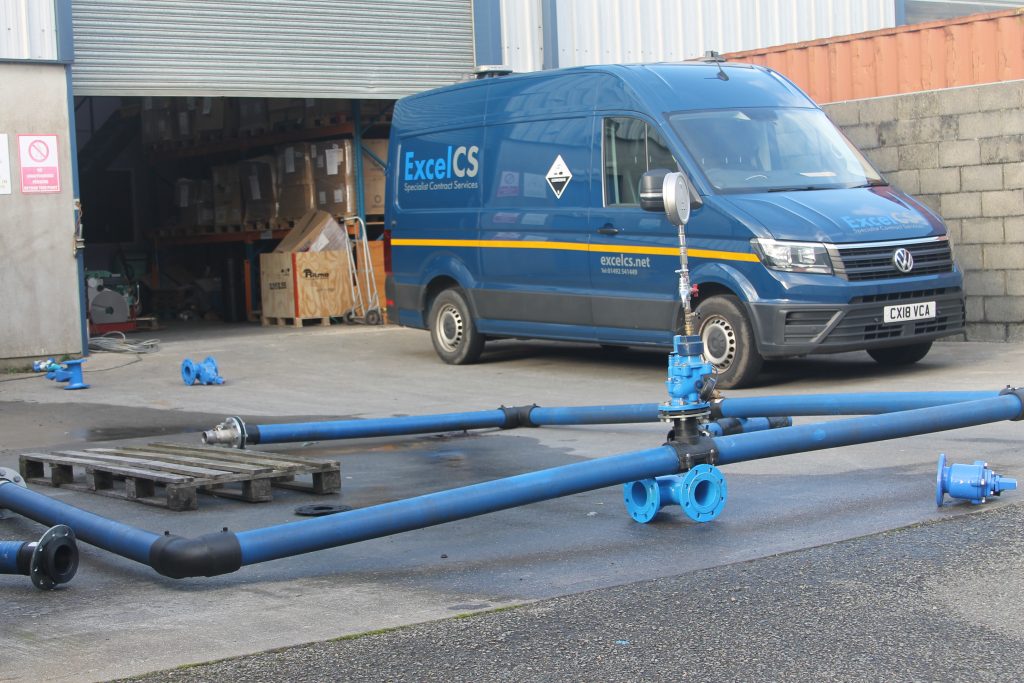

A useful take-off does more than count metres of pipe. It turns the design intent into a schedule that can be checked, priced and supplied without hiding the decisions that still need confirmation.
Begin with a controlled drawing review
Confirm that the drawing revision, specification and scope are aligned before measuring anything. A take-off based on an outdated layout can look complete while still sending the project in the wrong direction.
Mark the limits of supply and note where existing services, chambers, structures or specialist packages interface with the PE system.
- Drawing number and current revision
- Pipe material, pressure class and SDR
- Limits of supply and tie-in points
- Any notes that override the general specification
Build the schedule by system and diameter
Separate each service and pressure class, then measure pipe by diameter. Record fittings as individual line items rather than allowing them to disappear inside a general allowance.
Include changes of direction, branches, terminations and transitions. Where a detail is unclear, flag it as a query rather than making a silent assumption.
- Straight pipe length with a sensible project allowance
- Electrofusion, spigot or fabricated fittings
- Valves, flanges and ductile iron connections
- Jointing equipment, clamps, scrapers and consumables
Issue a take-off that can be reviewed
A clean schedule should let the estimator, buyer and site team trace every major quantity back to a drawing area or detail. Add notes for exclusions and outstanding technical decisions.
Sending the drawing set with the schedule allows the supplier to identify mismatches and suggest compatible product families before an order is placed.
- Reference drawing or zone for each group
- State assumed connection and flange standards
- Highlight items requiring technical confirmation
- Record required delivery dates or phases