
PE100 is used across water and infrastructure projects, but the correct product is determined by how the pipeline will operate and how it will be installed. A short technical review at the start avoids mismatched pipe, fittings and documentation later.
Define the operating duty
Start with the conveyed medium, design pressure, operating temperature and required design life. Confirm the project standard and any client-specific requirements.
The pipe SDR, fittings and joining method need to work as one system. Selection should never be based on pipe diameter alone.
- Service and design pressure
- Temperature and environmental exposure
- Required approvals and project specification
- Pipe outside diameter and SDR
Match the system to the installation method
Open-cut installation, directional drilling, pipe bursting and contaminated-ground applications place different demands on the pipe wall and protective layers.
A system intended for conventional trenching may not be the best response where surface damage, point loading or permeation risk needs to be controlled.
- Open trench and conventional bedding
- Trenchless installation and pull-in loads
- No-dig replacement or rehabilitation
- Barrier requirements in contaminated ground
Specify the complete connection system
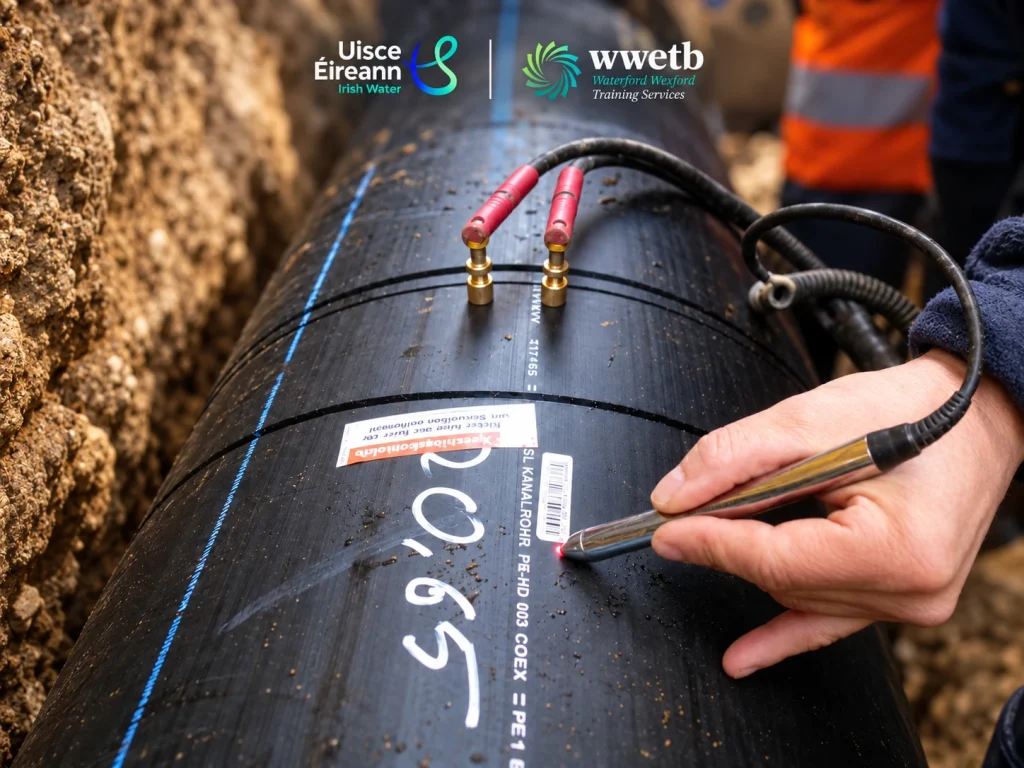
Include fittings, valves, transitions and the equipment needed to prepare and join the pipe. Confirm whether joints will be electrofusion, butt fusion or mechanical.
Documentation should cover the selected pipe and the components that make the installed system complete.
- Compatible fittings and pressure class
- Preparation, clamping and jointing equipment
- Inspection and traceability requirements
- Delivery lengths, handling and storage